Trenchless Sewer Line Replacement in Sherman Oaks: What It Costs in 2026
Trenchless Sewer Line Replacement in Sherman Oaks: What It Costs in 2026
Most Sherman Oaks sewer laterals built between 1945 and 1965 were vitrified clay tile. That pipe was standard at the time and it served the Valley well for decades. It does not resist root intrusion and joint separation the way modern materials do. By 2026, most clay laterals in 91423 and 91403 have reached or passed their service life. Many fail right where large ficus, sycamore, and magnolia roots press along Hazeltine Ave, Kester Ave, and Woodman Ave corridors. This is why trenchless sewer line replacement in Sherman Oaks is no longer a niche method. It is the default on properties where open trench would cut through driveways, mature hedges, and patios.
This article presents real pricing ranges for trenchless work in Sherman Oaks in 2026, and it explains the field conditions that drive those numbers up or down. It reflects what trained crews see every week in South of Ventura Boulevard blocks, Longridge Estates slopes, Chandler Estates lots, and Valley Vista streets. It also addresses LADBS permit requirements, LA County Sanitation coordination, and the technical specifications that control pipe bursting and CIPP lining on Los Angeles soil.
Why trenchless dominates in Sherman Oaks now
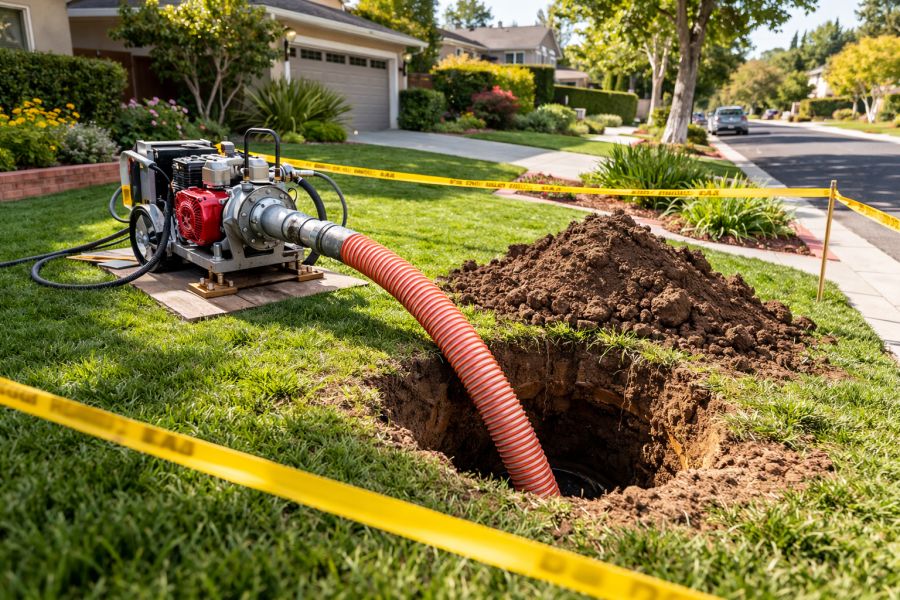
Sherman Oaks combines older housing stock with high property values, dense landscaping, and widespread concrete and stone hardscape. A failed sewer lateral under a cobblestone driveway can turn into a long and expensive open cut project. Trenchless methods avoid that by working through small access pits. The crew uses either pipe bursting to pull a new HDPE pipe through the alignment, or CIPP lining to cure an epoxy tube inside the old host pipe per ASTM standards. Both methods preserve yards and structures. They also finish in one to three days instead of a week or more.
Soil conditions also favor trenchless. Valley soils swing through wet and dry cycles. That produces joint offsets and bellies in clay tile between 5 and 8 feet deep. A trench that deep through tree-laced front yards near Ventura Boulevard can destabilize roots and require heavy shoring. In contrast, a pipe bursting setup or an inversion drum for CIPP runs with compact equipment and limited excavation. Costs concentrate on pipe length, access, and reinstatement of branch ties instead of restoration of disrupted surfaces.
What 2026 trenchless sewer line replacement costs in Sherman Oaks
Sherman Oaks homeowners ask one question first. What will it cost on their lot, with their length, their slope, and their driveway. The correct answer uses ranges and a camera inspection to pin down the exact scope. The following figures reflect 2026 pricing that ServiStar Plumbing and HVAC sees across 91423 and 91403, and also adjacent corridors in Encino 91436 and 91316, Studio City 91604, and Van Nuys 91401 and 91411. Numbers include labor, materials, access pits, and standard permit management unless otherwise noted.
Typical trenchless pipe bursting replacement of a private lateral in Sherman Oaks runs between $160 and $280 per linear foot in 2026 for standard depth and access. On many Valley homes that translates to a total between $9,500 and $22,000. The low end of the range fits 30 to 40 feet at shallow depth with a clean straight pull and easy pit placement. The high end fits 60 to 80 feet at 6 to 9 feet deep with concrete coring, tight front yards, or driveway pit sawcut and re-pour. CIPP lining often prices in a similar band for straight runs, with typical totals between $8,500 and $19,000 for 4 inch lines, and more when reinstating multiple branch connections off the main.
Hybrid scopes add cost but save structures. Replace the first 15 feet with pipe bursting from the house to under a planter, then line the remaining 40 feet to the property line to avoid cutting the driveway. That can land between $14,000 and $24,000 depending on access and reinstatement counts. Open trench is not always cheaper when you include hardscape restoration. A driveway demo and replacement on a Valley Vista property can alone run $4,000 to $10,000 based on finishes. That restoration cost does not exist on a clean trenchless plan.
Permit, inspection, and utility coordination add a line item but not a surprise. LADBS sewer permits and inspections for a standard lateral replacement typically range from about $400 to $1,200 in 2026, depending on valuation and scope. If the lateral connection at the property line requires a new saddle or a spot excavation in the public right of way, coordination with LA County Sanitation or the City of Los Angeles Bureau of Sanitation can add traffic control and flagging costs. Those can range from $1,000 to $3,500 based on lane conditions and schedule. Most private laterals terminate at a property line tee or wye that does not require street work, which keeps costs down.
Pre-work costs that appear on many Valley projects
A professional plan starts with a sewer camera inspection. That confirms failures and measures run length to the municipal tap. In 2026, a camera inspection with a written report in Sherman Oaks runs about $250 to $450. Many clay tile lines need hydro jetting to clear roots before lining. Hydro jet runs about $450 to $950 depending on time, depth, and nozzle selection. The crew targets 3,000 to 4,000 PSI on older clay to cut roots without breaking remaining joints. These pre-treatments avoid lining over organic material that would weaken adhesion or reduce diameter.
Method selection in Sherman Oaks lots
Trenchless method choice follows the failure mode, the lot, and whether the owner plans to protect or replace hardscape. Crews do not select methods by brand or habit. They select them by what solves the failure for decades under local code and site conditions.
Pipe bursting and when it is the better choice
Pipe bursting replaces the entire host pipe. A bursting head fractures the clay or cast iron and pulls a new HDPE pipe into place using a hydraulic or pneumatic pull system. In Sherman Oaks soil, the crew often uses a pull head pneumatic bursting rig and a compact hydraulic unit. The result is a seamless HDPE pipe with heat fused joints. HDPE resists root intrusion and minor ground movement. On a 1952 ranch in 91423 with 60 feet of clay tile under a driveway and lawn, pipe bursting can finish in a day after pits are set. ASTM F1962 governs design and installation parameters for bursting. It covers pulling forces, sizing, and acceptable host conditions.
Pipe bursting is ideal when the clay tile has many offsets, fractures, or a collapsed segment that will not pass a lining bladder. It is also the right call when the owner wants a full material reset from the structure to the property line. It avoids leaving any old joints in place. A properly pulled and fused 4 inch SDR rated HDPE lateral often carries a fifty-year design horizon on Valley soils, and in practice it lasts longer because root intrusion is no longer the main driver.
CIPP lining and where it solves best
CIPP cured in place pipe lining builds a new pipe inside the old one. The crew inverts or pulls a felt or fiberglass liner saturated in epoxy resin into the host. A calibration tube then holds pressure while the resin cures. ASTM F1216 governs CIPP. It specifies resin properties, curing methods, and sample verification. In Sherman Oaks work, ambient cure liners with accelerator or hot water cures are common. Post cure, the crew reinstates branch connections using robotic cutters or manual reinstatement through the cleanout.
Use CIPP when the host pipe remains generally round, passable, and without severe collapse. It is a strong fit in tree dense front yards south of Ventura Boulevard where property owners want to avoid cutting roots and hedges. Lining preserves grade and leaves the host in place to protect the new pipe. On a 1948 home in Chandler Estates with a 45 foot clay lateral under mature magnolias and a decorative stone walkway, CIPP installs with two small pits and no demolition on the surface.
Hybrid scopes and real Sherman Oaks examples
Many Valley lots mix methods. A common plan in Sherman Oaks uses pipe bursting for the first 20 feet where cast iron transitions to clay under compacted soils, then lines the remaining clay to the property line to pass under a poured driveway. It sewer repair in sherman oaks keeps costs in the middle of the range. It solves the weak points. It reduces the number of pits. It avoids sawcut and concrete replacement near the curb. Crews also combine trenchless with a short open trench near the structure to replace old fittings and add a proper two way cleanout per California Plumbing Code.
How housing archetypes steer specification
Sherman Oaks properties fall into a few patterns. Those patterns control what a correct trenchless scope looks like. They also explain why neighbors on the same block see different estimates.
Post war ranch homes from the 1940s and 1950s in central Sherman Oaks often have 4 inch clay tile laterals that run 35 to 60 feet to the tap. The yard has one large tree and a narrow driveway apron. These cases often favor CIPP lining if the host still holds shape. If the camera shows joint separation every 2 to 3 feet and roots at each bell, pipe bursting prevents rework. In Studio City 91604 near the Sherman Oaks border, many 1960s split level homes carry cast iron drain stacks with a clay lateral beyond the foundation. The stack often needs a short open trench section for a clean transition fitting and a two way cleanout. In Sherman Oaks Hills, some 1980s and 1990s redevelopments carry ABS laterals with a single offset joint near the property line. A short spot repair or a short CIPP segment may be more appropriate than full line replacement.
Hillside properties in Royal Woods and Valley Vista often present more depth. Depth increases the pit size and sometimes calls for temporary shoring. It also adds a small premium to per foot labor. These lots also live in high water pressure zones. While water pressure affects supply piping more than sewer function, it influences the call to include a backwater valve where downhill backflow risk exists per CPC rules and local practice. The valve install adds a few thousand dollars but protects finished flooring from public main surcharges that can occur on steep streets near Mulholland Drive.
Local field data that informs 2026 cost planning
ServiStar’s inspection records show a clear pattern in Sherman Oaks. Between two thirds and three quarters of sewer repair Sherman Oaks camera inspections on pre 1965 clay laterals in zip code 91423 show active root intrusion at one or more bell joints. The team reaches these lines most often on blocks south of Ventura Boulevard, near Hazeltine Ave and Kester Ave corridors where large ficus and magnolia trees dominate the parkway. Clearing that root mass to prepare for lining requires a hydro jet run at 3,000 to 4,000 PSI with a root cutter nozzle, followed by a second pass with a polishing nozzle to remove fines. This sequence improves resin bond during CIPP and avoids soft spots.
Another shareable note for local owners is the length and depth profile. Across Sherman Oaks, most private laterals fall between 35 and 65 feet before they reach the property line connection. Depth typically ranges from 4 to 8 feet near the curb. These numbers do not look extreme on paper, but a six foot depth under a driveway slab near the curb increases shoring needs and concrete restoration risk on open trench bids. A trenchless plan cuts both out of the equation and removes 4 to 10 days of downtime from a schedule that must pass LADBS inspection and keep neighbors and tenants happy.
Diagnostic work that precedes any trenchless scope
A trenchless quote without a camera run is guesswork. Crews put a RIDGID SeeSnake head into the line and record the full path. The inspection confirms the host material, length to the city tap, the presence of a belly, offset joints, a collapse, or breaks. It logs the number and location of branch tie ins that may need reinstatement after lining. It also confirms the lateral size, which is usually 4 inch on Sherman Oaks homes but can open to 6 inch on some larger properties or near multi unit buildings closer to Ventura Boulevard.
If the line is blocked, a rooter pass may open it enough to pass the camera. Serving the Valley, the crew uses sectional cable machines when roots are tight at the entrance, and a Spartan hydro jet when the line is passable but fouled. A clean line makes a better video and a better plan. The crew provides a digital link and stills. The owner can share it with neighbors or HOA, which helps when shared laterals exist in older duplex lots near Riverside Drive.
What LADBS, LA County Sanitation, and code require
Sewer lateral replacement in the City of Los Angeles requires a plumbing permit and inspection. On trenchless scopes, LADBS inspectors check the access pits, the cleanout installation, the backwater valve where installed, and the final post install camera verification before backfill. The LADBS Van Nuys office serves Sherman Oaks, Encino, Studio City, and Valley Village. Processing of a standard residential lateral permit typically runs one to two weeks in 2026 for straight scopes. Larger commercial or multi unit projects may take longer if traffic control and public right of way coordination are needed.
LA County Sanitation District and the City of Los Angeles Bureau of Sanitation manage the mains. Most Sherman Oaks homes connect to a city maintained main in the street or alley. Where work touches the connection at the property line or requires replacement of a damaged wye or saddle in the public right of way, coordination is required. Some jurisdictions in Los Angeles County enforce private sewer lateral compliance at property transfer. City of Los Angeles does not have a blanket citywide point of sale lateral program at present, but buyers and sellers should confirm with title, escrow, or their agent if any specific neighborhood program applies. ServiStar coordinates with the appropriate agency on each project and documents materials and methods to current code.
California Plumbing Code governs cleanout placement. In Sherman Oaks, a two way cleanout at the property line is the most common configuration when crews update an older home. It aids future maintenance. It also satisfies best practice on access. Where a backwater valve is appropriate due to elevation and surcharge risk, it must be accessible for maintenance and installed per code orientation.
Brands, materials, and verification standards used in the Valley
Pipe bursting work uses high density polyethylene pipe with heat fused joints. ServiStar crews pull with HammerHead or TRIC bursting systems sized to the host diameter and run length. For CIPP, Perma Liner systems are common, using felt or fiberglass tubes and epoxy resins matched to host condition and cure method. Before either method, a RIDGID SeeSnake camera verifies the failure and the post install result. Hydro jet service uses Spartan or comparable jets rated to 4,000 PSI with root cutter, grease cutter, and polishing nozzles on hand for different materials. All CIPP installation follows ASTM F1216 requirements for sample, cure, and thickness. All bursting follows ASTM F1962 planning for pull forces and upsizing rules. These are not marketing references. They are the standards inspectors know and expect to see in the submittals and job notes.
How geography changes the trenchless plan
South of Ventura Boulevard blocks sit on longer lots with deep front yards and mature trees. The lateral often runs under turf, planters, and a long driveway. CIPP shines here if the host holds shape. Hazeltine Ave side streets show heavy root intrusion, but the clay is often round enough to line. Kester Ave side streets lean toward bursting when joints are broken and offsets are severe.
Chandler Estates lots present a mix. They have manicured lawns and large canopies. Owners care about preservation. Lining is common. Longridge Estates and Valley Vista hillside streets often have deeper taps and limited street parking. Pits require careful staging and shoring. Pipe bursting here solves broken runs with high offsets. It also avoids long shoring time on deep trenches. Near Westfield Fashion Square and the Sherman Oaks Galleria, some laterals cross under shared drive aisles or HOA maintained landscapes. A hybrid scope reduces HOA restoration obligations and keeps neighbors out of construction for a week.
What causes higher or lower cost on the same block
Two houses can sit fifty feet apart and see different prices. The reasons sit in the ground and in the access. A straight 45 foot run at five feet deep with grass pits is a clean day for a crew. The same run under a stamped concrete driveway with two tree roots crossing the alignment and a street near a school zone can add several thousand dollars for sawcut, concrete, and traffic control windows. Add a broken wye at the property line and costs rise again because a spot in the right of way now needs agency signoff and protection. These are not surprises. They are known variables once the camera run and locate are complete.
- Length and depth of the lateral from cleanout to tap
- Number of reinstatements for branches after CIPP
- Access pit locations under concrete, pavers, or turf
- Need for traffic control or right of way work near the curb
- Cleanout and backwater valve upgrades required by code
Timeline differences owners feel
Trenchless work compresses schedules. A standard 40 to 60 foot pipe bursting or CIPP job in Sherman Oaks takes one to three days once permits and materials are ready. That includes a pre cure camera run, setup, pull or inversion, cure, reinstatement, post install camera, and inspection. Open trench excavation on the same length can run five to ten working days depending on depth, shoring, and restoration. Where a business on Ventura Boulevard must stay open, the difference affects revenue. Where a family in 91423 lives on site, the difference affects noise, parking, and stress.
What a correct trenchless scope includes on a Sherman Oaks home
A camera inspection with locate and distance report starts the scope. The plan then calls for hydro jet cleaning when roots or sludge are present. The method selection follows the condition. On bursting, the crew excavates a launch and a receiving pit, fuses HDPE segments, pulls the head, connects to ABS or cast iron at the structure with the correct transition fitting, and makes the property line connection at an existing wye or a new fitting if needed. On CIPP, the crew inverts the liner, monitors pressure and cure time, and reinstates branches. Both methods end with a two way cleanout near the property line if not already present and a post install video for the file. Both include LADBS inspection before final backfill.
Special cases in the Valley and how they affect decisions
Bellied lines complicate lining. A small belly that holds water can still line if crews stage a bypass and dry the pipe before inversion. A long or deep belly near a root mass can trap resin and produce a soft spot. In those conditions, pipe bursting is the safer choice. Cast iron with heavy scale needs prep. Crews will descale and jet before any lining attempt. If the scale remains heavy, bursting removes the problem entirely. Orangeburg pipe appears in a few older Valley properties. It does not hold shape for lining and collapses easily. Bursting is the correct fix.
Shared laterals between duplexes near Riverside Drive or off Ventura Boulevard require neighbor coordination and clear scope definition. ServiStar maps both sides, records written access, and sequences work to restore service on the same day. On commercial parcels near Sepulveda Pass and the 405 corridor, larger diameters and deeper taps require bigger rigs and sometimes night work to clear lane restrictions. Costs scale with diameter and depth. These jobs need early conversations with the Bureau of Sanitation and inspectors at the LADBS Van Nuys office.
Comparing trenchless to open trench on one real scenario
Take a 1956 ranch on a 7,000 square foot lot in 91423 near the Van Nuys Sherman Oaks Recreation Center. The 55 foot clay lateral runs under a lawn, then a 20 foot stamped concrete driveway apron, and ties into the main at seven feet deep. Camera shows heavy root intrusion at each joint and one offset that catches paper. Open trench would demo and replace the driveway, shore the trench at six to seven feet, and work around a parkway jacaranda. That schedule sits at eight days and adds $6,000 in concrete restoration. Trenchless bursting can set pits in the lawn and near the curb, fuse HDPE, pull in one day, and backfill after inspection. Total cost with permit and cleanout lands between $16,000 and $20,000 in 2026. Open trench would often exceed that after restoration. The trenchless owner keeps the driveway intact and uses the home the next day.
Hydro jet specifications that apply to Sherman Oaks clay
Not all jetting is the same. Older clay tile joints open under high point pressure if the nozzle is wrong. Crews use a root cutter or chain flail to remove tough intrusions and target 3,000 to 4,000 PSI on laterals with caution at offsets. The jet run starts at the downstream pit and moves upstream to push debris out. After cutting, a polishing nozzle at lower flow clears fines. These passes prepare a safe host for CIPP resin bond. On cast iron runs that will be lined, crews pair jetting with mechanical descaling to give the epoxy a clean surface. This level of prep shows up as better post install videos and fewer callbacks.
What owners can expect during a trenchless project in the Valley
The crew protects surfaces where hoses and lines cross. The team explains where pits will go and how deep they will be. Work hours match City of Los Angeles rules. Parking is staged to avoid blocking neighbors. When a backwater valve is included, the techs show the owner the access box and explain maintenance. Wastewater service is interrupted during the pull or inversion and the cure period. Crews schedule that window to minimize impact and provide temporary solutions when needed for multi unit buildings or commercial spaces near Ventura Boulevard and the Sherman Oaks Galleria.
Neighborhood and zip coverage for this service
ServiStar provides trenchless sewer line replacement in Sherman Oaks through zip codes 91423 and 91403. The team also handles adjacent corridors in Encino 91436 and 91316, Studio City 91604, Van Nuys 91401 and 91411, Valley Village 91607, and Toluca Lake 91602. Service runs across Sherman Oaks Hills, South of Ventura Boulevard, Longridge Estates, Chandler Estates, Royal Woods, and Valley Vista. Crews know the traffic windows around the 101 and 405, the parking limits south of Ventura Boulevard, and the local inspector schedules at the LADBS Van Nuys office. Those details help keep short trenchless schedules on time.
How estimates are built and why they vary
Reliable estimates in 2026 are built from a camera video, a locate, and an on site look at access points and surfaces. The linear footage, depth, and method determine the base. The number of reinstatements for CIPP or transition fittings for bursting add precision. Pits under grass or planters present less cost than pits through pavers or stamped concrete. The presence of a property line cleanout, an existing backwater valve, and a recent ABS or cast iron transition can also reduce scope. Traffic control near busy corridors like Ventura Boulevard or near schools adds a permitting and labor layer. None of this is guesswork once the inspection is complete.
Material and code notes that affect longevity
HDPE laterals installed by pipe bursting resist corrosion and root intrusion. Heat fused joints remove gasket failure as a mode. Modern ABS or PVC inside the property line at the transition supports proper slope with solvent welded joints. CIPP liners built to ASTM F1216 provide a structural wall thickness designed for soil load at the measured depth. Both methods rely on clean preparation and correct curing or pulling. Correct cleanouts and a code compliant backwater valve on gravity challenged lots reduce future risk from surcharges. These are small parts of the budget with outsized value over decades.
Surprising but useful local claim for owners and agents
In ServiStar field logs from 2023 through 2025, most single family laterals in central Sherman Oaks measured between 42 and 58 feet from the main cleanout to the city tap, and the average depth at the property line sat just under six feet. That combination puts most homes in a sweet spot for one day trenchless replacements that do not disturb driveways. Agents and buyers along Riverside Drive and near Westfield Fashion Square often budget $12,000 to $18,000 for a full trenchless scope on pre 1965 homes that have not yet been updated. That budget number has proven accurate within a few thousand dollars on typical lots after camera confirmation.
A brief word on HVAC and other work often bundled
Owners sometimes coordinate trenchless work with HVAC changeouts or water heater upgrades. That allows a single LADBS permit push, shared site protection, and one inspection window. Under the 2025 California Building Codes, HVAC changeouts in Sherman Oaks require SEER2 minimums and Title 24 duct sealing verification. Those projects do not conflict with trenchless work, but good scheduling reduces disruption. ServiStar handles both under a single CSLB umbrella with C 36 Plumbing and C 20 HVAC classifications, so the office can sequence visits without creating inspection bottlenecks.
What to ask before committing to a trenchless replacement
Owners should see the camera video and receive a written line map with lengths, depths, and failure notes. They should confirm which ASTM standard governs the chosen method. They should ask how many reinstatements are needed and whether pits will cut through concrete or turf. They should confirm that LADBS permits and inspections are included and that any needed LA County Sanitation coordination is part of the plan. They should ask for a post install video before backfill. These questions protect the investment and take very little time to cover on site.
- Request the camera file and a written footage and depth log
- Confirm ASTM F1216 for CIPP or ASTM F1962 for bursting
- Ask about cleanout placement and any backwater valve need
- Clarify which surfaces will be cut and restored
- Verify LADBS permit and inspection are included
What owners in 91423 and 91403 are paying in 2026
Real projects within Sherman Oaks this year sit inside the ranges above. A South of Ventura Boulevard bungalow with 40 feet of clay under lawn and a straight driveway paid about $11,800 for CIPP after hydro jet prep and inspection. A Chandler Estates property with 65 feet of offset clay and a deep property line connection paid just over $21,000 for pipe bursting with a new two way cleanout and a backwater valve. A Valley Vista hillside lot with a hybrid scope paid about $18,500. All three avoided driveway demo and all passed LADBS inspection on the first visit. These numbers reflect typical cases and can shift with right of way work or unique access.
Where the crews are working in Sherman Oaks
ServiStar dispatches from 13351 Riverside Drive, Suite 414, inside 91423. Crews run daily near Ventura Boulevard, Westfield Fashion Square, and the Sherman Oaks Galleria. Trucks also cover Encino, Studio City, Van Nuys, North Hollywood, and Toluca Lake. The location and hours allow same day camera inspection and often same week trenchless replacement. This matters when a line collapses and sewage backs up into a home. Emergency plumbing crews can stop a backup, jet a path, and line or burst the failed segment on a tight clock.
A clear path to a durable lateral
Trenchless sewer line replacement in Sherman Oaks solves a specific set of failures in a neighborhood with aging clay tile and high restoration costs. The cost ranges in 2026 are predictable once the camera video and site access are known. Pipe bursting and CIPP lining each have a clear role under ASTM standards. LADBS permits and inspections are part of the plan. LA County Sanitation coordination is rare on private only scopes but handled when a connection repair crosses the line. On the ground, the method that preserves surfaces and delivers a structural result the inspector can sign off wins every time.
Why local owners select ServiStar for trenchless work
ServiStar Plumbing and HVAC operates as a CSLB licensed contractor under C 36 Plumbing and C 20 HVAC classifications. The team is bonded and insured, BBB Accredited, Google Guaranteed, and EPA Section 608 certified. Field crews install Perma Liner CIPP systems and pull HDPE laterals with HammerHead and TRIC bursting equipment. They run RIDGID SeeSnake cameras and Spartan hydro jets rated to 4,000 PSI. Every trenchless scope includes LADBS permit management and inspection. The company serves the full San Fernando Valley from Sherman Oaks through Encino, Studio City, Van Nuys, Valley Village, Toluca Lake, and Burbank with 24 hour dispatch.
Request a 2026 trenchless quote calibrated to your block
ServiStar Plumbing and HVAC performs trenchless sewer line replacement in Sherman Oaks and across the San Fernando Valley. Dispatch runs 24 hours a day from 13351 Riverside Drive, Suite 414, Sherman Oaks, CA 91423. Projects include LADBS permit and inspection, upfront flat rate pricing on standard scopes, and financing options. Call +1-818-873-0613 or visit https://www.servistarplumbingandhvac.com to schedule a camera inspection and a same week estimate. Service covers 91423 and 91403, plus Encino, Studio City, Van Nuys, North Hollywood, Valley Village, Toluca Lake, and surrounding communities. Learn more at https://www.servistarplumbingandhvac.com/plumbing/trenchless-sewer-line-replacement/.
Servistar Plumbing and HVAC
13351 Riverside Dr Suite #414
Sherman Oaks,
CA
91423
Phone: (818) 873-0613
Website: servistarplumbingandhvac.com